News & Updates

Over 75 Years of Fish Larvae Observations from California Coast Now Globally Accessible
CalCOFI has recently published its long-running larval fish and egg dataset to the Ocean Biodiversity Information System (OBIS) which has expanded the accessibility of this foundational time series to the global scientific community. While the data have long been available through ERDDAP, this new integration into OBIS significantly increases discoverability and interoperability. We hope that this will enable broader use in global biodiversity syntheses, ecosystem analyses, and use-inspired research. The dataset, built from more than 75 years of standardized observations along the California Current, provides detailed information on fish early life stages and remains one of the most important records for understanding marine population dynamics and ocean ecosystem change. For more information please see these articles from GOOS (https://goosocean.org/news/over-75-years-of-fish-larvae-observations-from-california-coast-now-globally-accessible/) and OBIS (https://obis.org/2026/04/15/fish-egg-larvae-dataset-calcofi/).

Tiny Ocean Life Helps Scientists Estimate the Prevalence of Whales Off California: eDNA technology improves view of marine ecosystems
A new study co-led by CalCOFI researchers, including Erin Satterthwaite, demonstrates how environmental DNA (eDNA) and microbial community data collected through the CalCOFI program can improve predictions of baleen whale density in the California Current Ecosystem. Using CalCOFI observations and samples collected from 2014–2020, the study found that microscopic ocean life can provide important ecological habitat information linked to whales. This improved prediction accuracy beyond traditional oceanographic approaches. This work highlights the growing value of CalCOFI’s long-term ecosystem observations and emerging genomic tools for understanding and managing marine ecosystems. Read the Scripps press release here: https://scripps.ucsd.edu/news/tiny-ocean-life-helps-scientists-estimate-prevalence-whales-california and the paper, Microbial and small zooplankton communities predict density of baleen whales in the southern California Current Ecosystem here: https://journals.plos.org/plosone/article?id=10.1371/journal.pone.0334209

Feeding Frenzies and Whale Songs: Notes from the Flying Bridge
Hi! I’m Ainsleigh Lloyd, a researcher in the Marine Bioacoustics Research Collaborative at Scripps Institution of Oceanography. I was the marine mammal acoustician and one of the observers on this CalCOFI cruise. My duties onboard included identifying and recording marine mammal presence and behavior, and deploying acoustic equipment to record calls, clicks, and other bioacoustic signals. Half of my time was spent on the flying bridge (the very top of the ship!) to look for mammals. The other half of my time was spent in the acoustics lab recording and monitoring soundscapes in real time.

Beneath Pacific Tides: Sharing tales from CalCOFI at the Channel Islands Maritime Museum
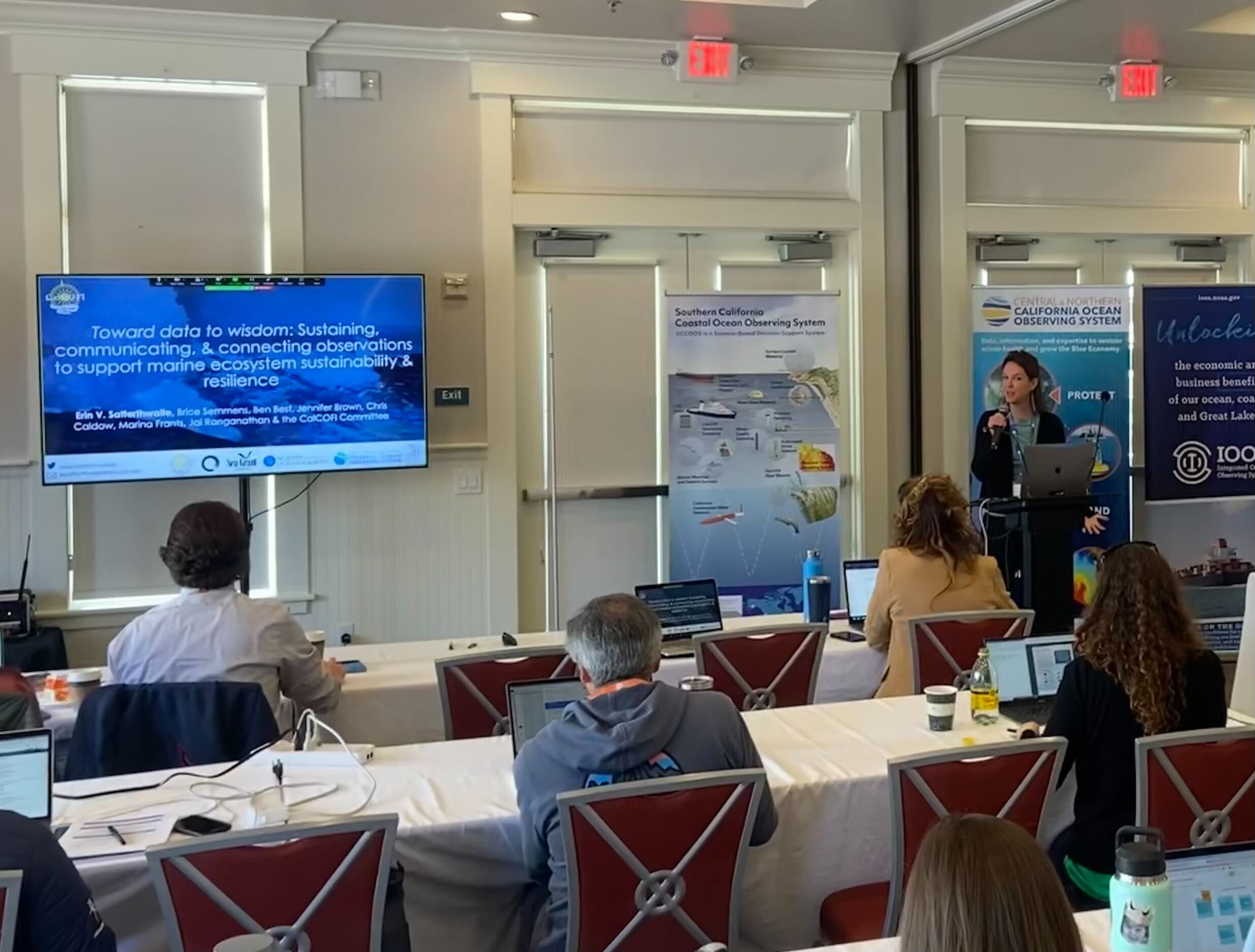
In January, I had the pleasure of speaking at the Channel Islands Maritime Museum in Oxnard, kicking off their 2026 Invited Speaker Series. In my talk, “Beneath Pacific Tides: Tales from over 75 Years of Ocean Observations in California,” I took the audience on a journey through some of my favorite stories from CalCOFI’s decades of ocean research.

Cruise Experience Spotlight: A Full-Circle Moment at Sea
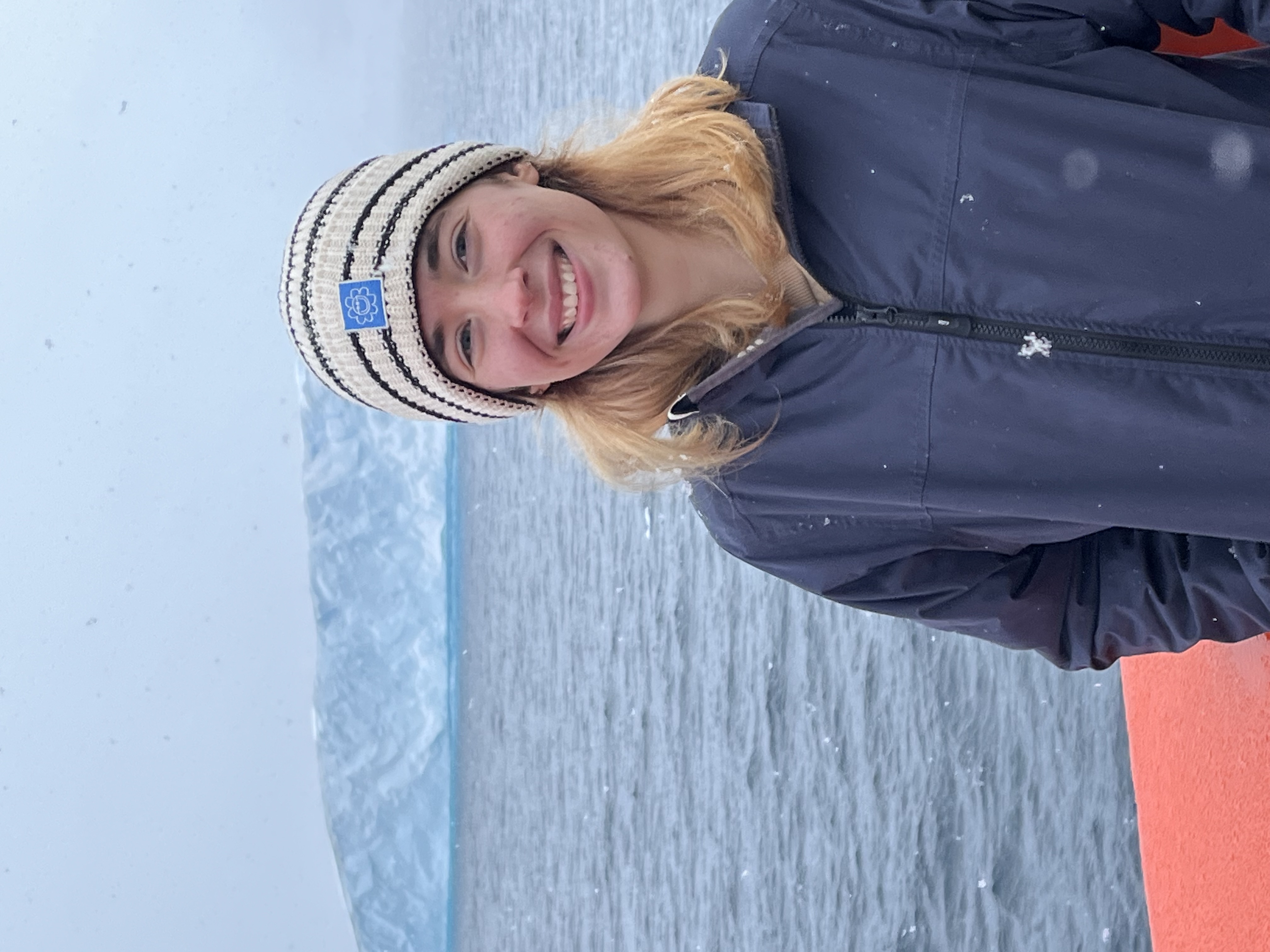
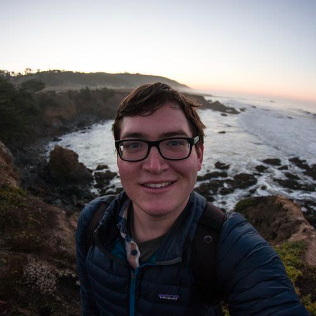
Hi, my name is Mallory! I’m a current Master’s student at SIO, and I got to help out with CCE and CalCOFI data collection on the cruise!
As an undergraduate student, I had worked on consolidating and organizing PRPOOS plankton data from the CCE LTER database, so it was a satisfying, full-circle moment to finally get to be out on the ship, seeing the origin of where that data came from.

Cruise Experience Spotlight: A Sea-Bird Scientific Perspective from the R/V Sally Ride
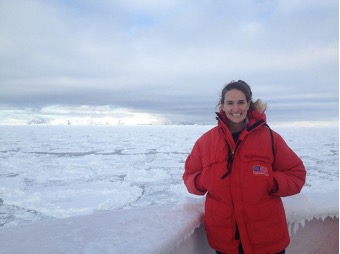
My name is Marialena Christopoulou, and I am a Customer Support Scientist in
Physical Oceanography at Sea-Bird Scientific. From November 9th to 18th, I had the
opportunity to join a CalCOFI cruise aboard the R/V Sally Ride.

Charting the Future of Large Research Vessels in the U.S.
I still can remember the first time I had the opportunity to sail on a large research vessel. We transited nearly 300 miles off the California coast. As we moved into the open ocean, the water became a deep crystal blue. The color and quality of the water was unlike anything I had ever seen in my life and the clarity of the water felt almost symbolic. Being that far offshore, aboard a large ship, and immersed in the vastness of the ocean, made the importance of ships very clear to me. I realized what an essential platform they are to connect people directly to the open ocean and to each other, to enable essential data collection, and to underpin science that serves society.

Cruise Experience Spotlight: Learning from CalCOFI: Technical Insights from the 2511 Research Cruise
Technicians from ESNZ joined the CalCOFI 2511 cruise to gain hands-on experience with at-sea instrumentation, calibration, and sampling workflows. From CTD operations and SUNA integration to oxygen sampling techniques, the exchange provided valuable insight that will help inform future Deep Argo float deployments and strengthen international collaboration in ocean observing.

Cruise Experience Spotlight: eDNA Sampling on the Fall 2025 CalCOFI Cruise
My name is Ella Crotty, a recent college graduate and lab volunteer at Scripps Institution of Oceanography, and the Fall 2025 CalCOFI cruise was my first multi-day research cruise! I was aboard as a volunteer on the MOSAIC (MURI Ocean Sampling Across an Integrated Continuum) project, a project that uses environmental DNA (eDNA) to detect marine mammals along the route of the CalCOFI cruise.